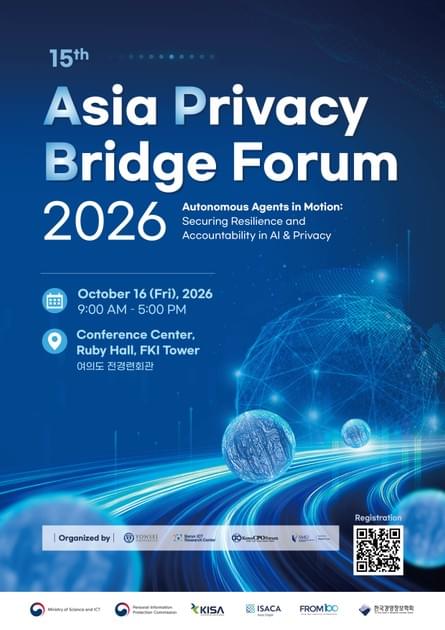


Invitation to 2026 Asia Privacy Bridge Forum
Artificial intelligence is rapidly moving beyond systems that merely generate content or respond to prompts. Emerging autonomous AI agents can increasingly make decisions, use external tools, coordinate with other systems, and act across digital environments with limited human intervention. These developments create significant opportunities for innovation, while also raising new questions about resilience, accountability, privacy, human oversight, and the responsible use of data. This year’s APB Forum seeks to address these challenges by bringing together diverse experts from across Asia and beyond.
The 15th Asia Privacy Bridge Forum, held in conjunction with Privacy Global Edge, convenes under the theme “Autonomous Agents in Motion: Securing Resilience and Accountability in AI & Privacy.” The theme reflects a shared need to ensure that, as AI systems become more autonomous and interconnected, technological progress continues in ways that are reliable, accountable, and consistent with fundamental rights and responsible data practices.
Over the years, the APB Forum has developed into a platform for sustained international dialogue on AI governance, data privacy, and digital responsibility. It has brought together participants from more than 19 countries and engaged regulators, policymakers, industry leaders, academics, civil society, practitioners, and international organizations including the OECD and APEC. By bringing these different perspectives into conversation, the Forum has sought to bridge technological development with legal, policy, institutional, and societal considerations.
Building on this foundation, APB 2026 will explore how governance can evolve alongside increasingly autonomous AI systems. The Forum will consider how innovation can be encouraged while responsibility remains identifiable, systems remain resilient, privacy and personal data are protected, and meaningful human oversight is maintained. It will also examine how cooperation across sectors and jurisdictions can help address challenges that extend beyond the capacity of any single institution, industry, or country.
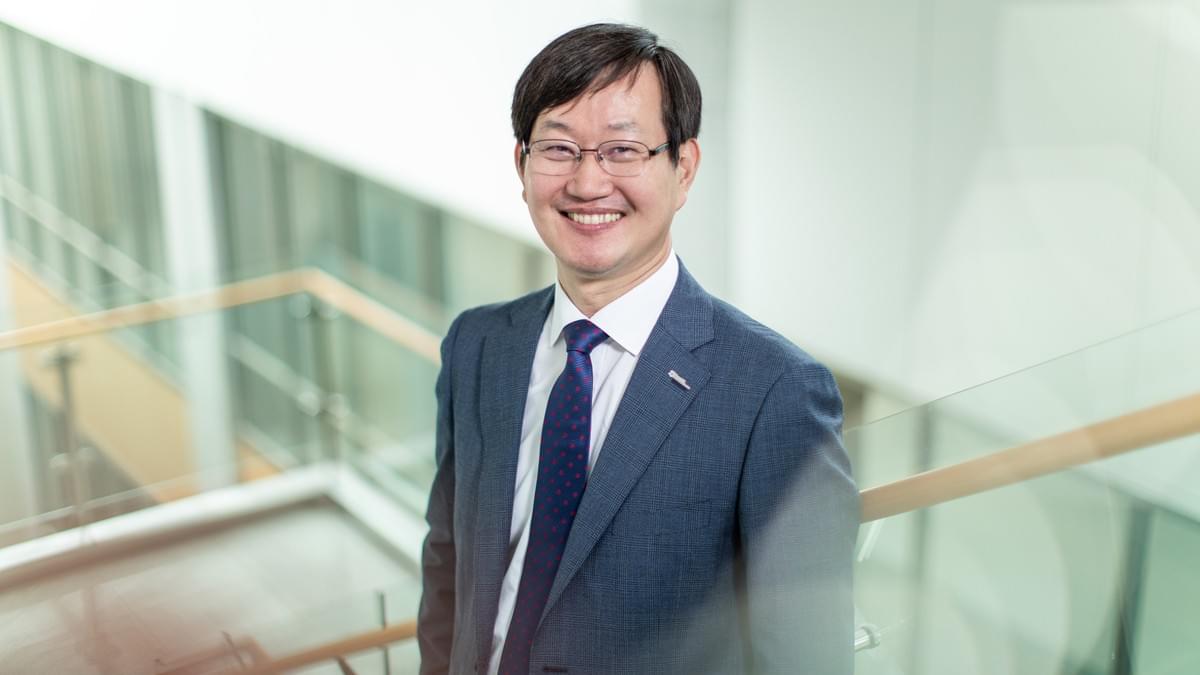
At a time when AI is developing faster than many existing governance frameworks, open dialogue, mutual learning, and practical cooperation are more important than ever. I hope that APB 2026 will provide an inclusive forum in which different experiences and perspectives can contribute to approaches that strengthen both innovation and trust, and help shape a more responsible and resilient digital future. On behalf of the organizing committee, I extend my sincere appreciation to all participants for joining the 15th Asia Privacy Bridge Forum.
Beomsoo KIM
Executive Director, Barun ICT Research Center
Yonsei University
“Autonomous Agents in Motion: Securing Resilience and Accountability in AI & Privacy”
The 15th Asia Privacy Bridge Forum will bring together distinguished experts from across Asia to explore emerging approaches to AI governance in the age of autonomous AI. The Forum will address a broad range of critical issues, from the institutional foundations for AI deployment in public services and digital infrastructure to trustworthy AI design, legal accountability, and the rights of data subjects.
We invite you to join this timely dialogue on advancing AI innovation while fostering a safe, trustworthy, and responsible environment for the development and use of AI.Keynote Speeches

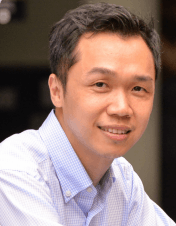
Agents Without Principals? Privacy, Responsibility, and Power in the Age of Autonomous AI
Simon CHESTERMAN |
David Marshall Professor of Law, Vice Provost (Educational Innovation) / AI Governance and Policy Lead, National University of Singapore / NUS AI Institute, Singapore
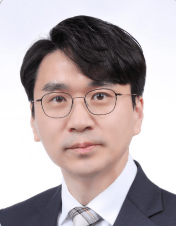
Resilience and Accountability in AI & Privacy in Singapore and Southeast Asia
Warren B. CHIK |
Professor Director, Yong Pung How School of Law / SMU Law Academy, Singapore Management University, Singapore
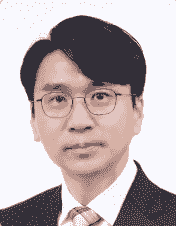
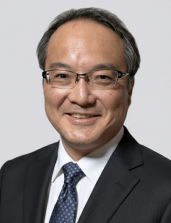
Privacy in the Age of Agentic AI: From Control to Resilience - Building Trust in Autonomous AI
Hobeom CHA |
CPO, SK Telecom, Republic of Korea
Session 1
Resilient Agentic AI:
Building Trust through Coordination and Collaboration
Moderator: Beak-Cheol JANG Associate Director / Professor Barun ICT Research Center /
Graduate School of Information, Yonsei University, Republic of Korea
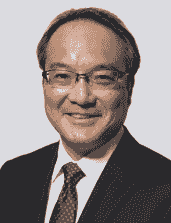
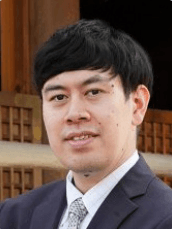
Towards an Agentic Society: AI Agents that Facilitate Public Discussion and Consensus Building
Takayuki ITO |
Professor, Department of Social Informatics, Graduate School of informatics,
Kyoto University, Japan
Takayuki Ito is a Professor at Kyoto University, Japan. He received his B.E., M.E., and Doctor of Engineering degrees from Nagoya Institute of Technology in 1995, 1997, and 2000, respectively. He was a JSPS Research Fellow (1999–2001) and a visiting researcher at USC / ISI (2000–2001), Harvard University and the MIT Sloan School of Management (2005–2006), and the MIT Center for Collective Intelligence (2008–2010). He was an Professor at the Japan Advanced Institute of Science and Technology (JAIST) from 2001 to 2003 and subsequently joined Nagoya Institute of Technology, where he became a full Professor in 2014. Since October 2020, he has been a Professor at Kyoto University. He was also an Honorary Professor at the University of Wollongong, Australia (2022–2025), has been an Associate Member of the Science Council of Japan since 2023, and an Adjunct Professor at Guangzhou University, China, since 2024. His research focuses on multi-agent systems, artificial intelligence, agentic AI, collective intelligence, and Consensus Informatics, with particular emphasis on AI-supported public discussion, negotiation, collective decision-making, and consensus building. His recent work explores human–AI collective intelligence and the development of AI agents that facilitate large-scale discussions and consensus formation. He is the
Local Arrangements Chair of IJCAI2027 at Kyoto, an Emeritus Board Member of IFAAMAS and an Executive Committee Member of the IEEE Computer Society Technical Committee on Intelligent Informatics. He has served as Program Co-Chair of AAMAS 2013 and PRIMA 2009, and General Chair of PRIMA 2014. He is a Senior Member of both ACM and IEEE.
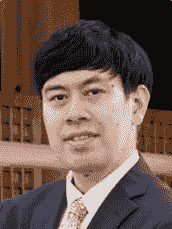
Sybil Attacks and Mechanism Design
Taiki TODO |
Professor, Graduate School of Information Science and Electrical Engineering, Kyushu University, Japan
Taiki Todo is an professor of the faculty of information science and electrical engineering (ISEE), and an affiliated member of the school of engineering, the school of science, and the graduate program of mathematics for innovation, Kyushu University. He obtained a Ph.D. degree of Information Science at Kyushu University in March 2012. His research interest lies at the intersection between computer science and game theory. More specifically, he is working on the theory of mechanism design, i.e., designing incentive mechanisms for various market situations such as auctions, barter exchange, school choice and voting. Recently he is serving as a senior program committee member of AAAI-27.
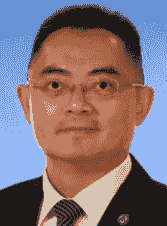
Federated Learning with Foundation Models
Han YU |
Professor, College of Computing and Data Science, Nanyang Technological University, Singapore
Dr. Han Yu is a tenured Professor in the College of Computing and Data Science (CCDS), Nanyang Technological University (NTU), Singapore. His work focuses on trustworthy federated learning. He has published over 300 research papers in leading international conferences and journals. He co-authored the book Federated Learning - the first monograph in this field. His research work has been recognized with multiple scientific awards. In 2021, he co-founded the Trustworthy Federated Ubiquitous Learning (TrustFUL) Research Lab. He is an Associate Editor of IEEE TNNLS, IJCAI Sponsorship Officer General, and Vice Chair of the IEEE Computational Intelligence Society (CIS) Standards Committee. For his continued contributions to the field of trustworthy AI and real-world impact in the society, he has been identified as one of the World’s Top 2% Scientists in AI, and selected as one of the JCI Ten Outstanding Young Persons (TOYP) of Singapore.
Session 2
Accountability in Autonomous AI:
Balancing Control, Privacy, and Innovation
Moderator: Wookjoon SUNG Professor Department of AI and Public Policy, Graduate School of Public Policy and Information Technology, Seoul National University of Science and Technology, Republic of Korea

Who Controls the Agent? Privacy Accountability Gaps in Autonomous AI Decision Chains
Dominic EDMONDSON |
Partner / Head of Privacy & Cybersecurity, Intellectual Property & Technology Group, Dentons Hong Kong LLP, Hong Kong
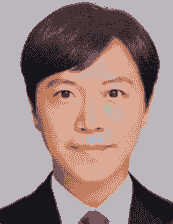
Dominic Edmondson is a partner in Dentons’ Intellectual Property & Technology Group, based in Hong Kong.
His practice focuses on global data privacy and data protection, artificial intelligence, technology, telecommunications, cybersecurity, e-commerce, digital media and IT transactions, as well as intellectual property licensing transactions, video game asset licensing, IP and data aspects of mergers and acquisitions, joint ventures and asset sales, application development and maintenance, and a diverse range of commercial arrangements.
His clients span a wide range of industries, with a particular focus on media and entertainment, technology, telecommunications, financial services, automotive, consumer goods and retail, and healthcare and life sciences.
Dominic spent four years in Beijing advising clients on intellectual property strategy and enforcement in Mainland China and is a fluent Mandarin speaker.
The Accuracy Paradox in the Age of AI: Balancing Precision, Privacy, and Legal Accountability
Haewon LEE |
Professor / Lawyer, School of Law, Kangwon National University, Republic of Korea
Haewon Lee is a Professor at Kangwon National University School of Law, specializing in AI, data, and privacy law. He holds a B.S. and M.S. in Computer Science from Seoul National University, and a Master’s and Ph.D. in Civil Law from Yonsei University.
His distinguished career spans public policy, financial institutions, and top-tier legal practice, including seven years as a Partner at Jipyong LLC, five years as a Deputy Director at the Ministry of the Interior and Safety (MOIS), and service at the Export-Import Bank of Korea. In the regulatory sphere, he has served as a member of the Personal Information Dispute Mediation Committee (PIPC) and the ICT Regulatory Sandbox Deliberation Committee (MSIT).
This unique convergence of computer engineering, government policymaking, and extensive legal practice deeply informs his pioneering research on algorithmic accountability and the legal governance of emerging digital technologies.

Balancing Data Protection and AI Innovation under Korea’s PIPA
Dayeon AHN |
Partner, IP & Technology Practice Group, Yulchon LLC, Republic of Korea
Dayeon Ahn is a partner in the IP & Technology Practice at Yulchon LLC, where she advises on data privacy and information security, AI and data, TMT, and fintech matters. She advises companies on privacy compliance, lawful data use, cross-border data transfers, data breach response, regulatory investigations, and emerging AI governance issues. Before joining Yulchon, she served as Head of Legal at a Korean fintech startup and as in-house counsel at EY Korea (EY Han Young Accounting Firm). These roles have given her a practical, business-oriented perspective on regulatory compliance. She is admitted to the Korean Bar and is a U.S. Certified Public Accountant (Washington State). She holds a J.D. from Yonsei University Law School and a B.B.A. from Yonsei University.
Session 3
Data Protection and Digital Transformation in the AI Era: Navigating a Changing Landscape
Moderator: Hee-Woong KIM Professor Graduate School of Information, Yonsei University, Republic of Korea
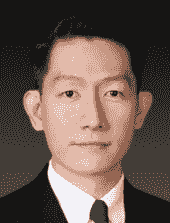
The Agentic Gap: Where AI Acts Stop and Privacy Laws Step In
Kyoungsic MIN |
Asia Regional Lead / Country Leader for Korea, VeraSafe / IAPP, Republic of Korea
Kyoungsic MIN is Privacy Counsel and Asia Regional Lead at VeraSafe, where he advises multinational companies on global privacy, data protection and AI governance and leads its Asia-Pacific practice. He is the IAPP Country Leader for Korea and serves on the IAPP Asia Advisory Board and the European Data Protection Board’s Support Pool of Experts. Admitted to practice in the Republic of Korea and Washington, DC, he previously worked at Yulchon LLC, the Investigation Department of the National Human Rights Commission of Korea and the Appeals Chamber of the International Criminal Court. His analysis of Korea’s AI Framework Act appears in the Business and Human Rights Journal (Cambridge University Press, 2026). He received the Korean Bar Association’s Outstanding Lawyer Award in 2026.
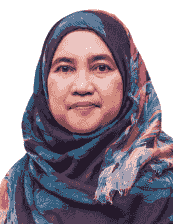
Defending the Digital Self: Navigating the Transition from Copyright Disputes to the Protection of Fundamental Human Dignity in the Era of Synthetic Media
Ida Madieha ABDUL GHANI AZMI |
Professor / Dean, Ahmad Ibrahim Kulliyyah of Laws, International Islamic University Malaysia, Malaysia
Professor Dr. Ida Madieha Abdul Ghani Azmi is Dean of the Ahmad Ibrahim Kulliyyah of Laws at the International Islamic University Malaysia (IIUM) and a leading scholar in intellectual property law, cyberlaw, and technology policy. She holds an LL.B. (Hons) from IIUM, an LL.M. from the University of Cambridge, and a Ph.D. from the University of London. Her work has informed major legal reforms in Malaysia, including as lead consultant for the Cybersecurity Act 2024 and Data Sharing Act 2025. She has also advised WIPO and national institutions on intellectual property policy, curricula, copyright, and competition, and has held board and tribunal roles at Malaysia’s Intellectual Property Office and Copyright Tribunal. Her international academic experience includes fellowships and research appointments at Cambridge, Max Planck, Monash, and several U.S. and U.K. universities.
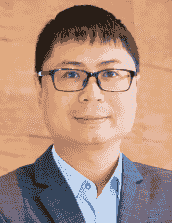
Caught Between Sovereignty and Market Power: Navigating Business Transformation in Vietnam and Policy Implications for Southeast Asia
Dong Quang NGUYEN |
Director, Institute for Policy Studies and Media Development, Vietnam
(Mr.) Nguyen Quang Dong, Director of Institute for Policy Studies and Media Development (IPS), is an expert on governance and public policy. His recent research and consultancy focus on digital governance and regulatory policies. IPS and its umbrella, the Vietnam Digital Communication Association, have provided in-depth analysis and policy consultations to National Assembly Committees, the Ministry of Science and Technology, and other policymaking bodies in developing Vietnam’s strategies, plans, and legislative initiatives for digital transformation and digital technologies. Dong holds a master’s degree in Governance and Public Policy from the University of Queensland, Australia.
Session 4
Sovereign AI and Cross- Border Data Governance:
Building Trusted Data Flows
Moderator: Namil KIM Professor Graduate School of Information, Yonsei University, Republic of Korea

Practices & Regulatory Challenges in Cross-Border Data Transfers in Korea
Sueyoung YUN |
Secretary General, Korean Chief Privacy Officers Council, Republic of Korea
Sueyoung YUN serves as Secretary-General of the Korean Chief Privacy Officers Council (KCPO) and has over 26 years of experience in data privacy. She holds a Ph.D. and M.A. in Consumer Science from Seoul National University.
Her career began at the Korea Internet & Security Agency (KISA), where she served as a Senior Researcher from 2000 to 2012, contributing to the development of national policies on cybersecurity and data protection. She later held senior leadership roles as Chief Privacy Officer and Data Protection Officer at eBay Korea (2012–2020) and as Chief Privacy Officer at Philip Morris Korea (2020–2024), leading corporate data privacy initiatives.

Sovereign AI and Data: Korea’s Choice in Data Protection Law
Hyesun YOON |
Professor, School of Law / Department of Artificial Intelligence, Hanyang University, Republic of Korea
Hyesun YOON is a Professor of Law at Hanyang University School of Law, specializing in administrative law and risk regulation, with a joint appointment in Hanyang’s Graduate School of Artificial Intelligence. Her research focuses on AI governance grounded in the management of safety and security risks, extending to data protection, nuclear law, and biotechnology and synthetic biology law. Her work examines legislative competition among nations through the lens of institutional competitiveness. She has taken part in the legislative process for several Korean statutes on AI and emerging technologies. She serves on the Ministry of Science and ICT’s 2045 Science and Technology Frontier Strategy Committee (Innovation Policy Division) and its Future Strategy Council on Science, Technology and AI, and as an advisory member of the National AI Strategy Committee. She also chairs the Data Subject Rights Working Group of the Personal Information Protection Commission’s AI Privacy Public-Private Policy Council and serves as Research Director of the Korean Public Law Association. Trained in both science and law, she holds a B.Sc. in biochemistry, an M.Sc. in physiology, and an LL.B. / B.C.L. from McGill University, and a Ph.D. in law from Seoul National University.

Sovereign AI: The Need for National Guardrails
V. SRIDHAR |
Professor, Centre for IT and Public Policy, International Institute of Information Technology Bangalore, India
Dr. V. Sridhar is Professor of Practice and Head of Continuing Professional Education at the International Institute of Information Technology Bangalore (IIIT-B), India. He is the author of four books: Three with Oxford University Press and one with Springer. His recent book on “5G and Beyond: Rewiring Telecom Regulation” has just been published (2026) by the Oxford University Press. Apart from these, he has also edited three books, the recent one being “Data Centric Living: Algorithms, Digitization and Regulation” published by Routledge in 2021. Dr. Sridhar has taught at many Institutions in the USA, Finland, New Zealand and India. He was a visiting research scholar at Aalto University, Finland; Annenberg School for Communication and Journalism, University of Southern California, USA; and Kogod School of Business, American University, USA. He has been a member of Government of India committees on Telecom and IT and also has industry experience in the communication industry. He has written more than 350 articles in prominent business newspapers and magazines relating to telecom regulation and policy in India. He has received funding from different sources, both national and international, for his research projects. Dr Sridhar has a Ph.D. from the University of Iowa, U.S.A., PGDIE from the Indian Institute of Management, Mumbai, India and Bachelor of Engineering (Honours) from College of Engineering, Guindy, Chennai, India. His work can be accessed at: http://www.vsridhar.info